
Looking for a podcast agency?
You searched for a podcast agency. Here's an honest answer: a good agency can be exactly the right move, if you know what you're paying for and who you're actually working with.
Some agencies hand you off. Account managers change, and the person who sold you the package isn't always the person who touches your audio. That's not true of every agency, but it's common enough to be worth checking before you sign, not after.
I'm Bren Russell. I'm not an agency, I'm one producer with 17 years in broadcasting. If you'd rather work with the same person from the first conversation through every episode, that's what I offer. No handoffs, by design.
What this actually costs
How does a podcast agency charge?
Expect somewhere between €800 and €2,000 per episode. That's not a criticism, it's just the number. And it can be worth every cent, if you're working with the right agency. That's exactly what the questions below are for. For that price, you should be seeing growth, not just clean audio.
Here's the standard worth holding them to: if you're paying over €500 an episode, you should not just be getting files back. The agency should be helping you become a better podcaster at every step.
How I work differently to an agency
Ever take your car for its annual service once the warranty's run out? Guaranteed the dealership found a long list of things that needed fixing. That's not a coincidence, a dealership ultimately wants you to buy the next model, so there's always something else worth flagging, and protocols built around that goal, not yours. Take the same car to a mechanic and it's a different story. He wants you to get the best value out of the car you already have. He diagnoses what's actually wrong, fixes that specific thing, and tells you how to keep it running well. He's not selling you the next model, he's solving today, on his time, for the problem in front of him.
And why do you go back to the same mechanic next year? Because you trust him. That's how my model works too. Small overheads, no 50 plus staff to pay, a business built entirely on trust rather than contracts or a sales process. You stay because the work's right for you, not because you're locked in.
It's not just a lower rate either. I'm not trying to sell you as much as possible. I'm trying to help you with what you actually need for where you are right now.
If you just want files delivered back, files in, files out, that shouldn't cost you €500 an episode.
Get an instant quoteIf you're just starting out
There's no reason to jump straight to €1,000 an episode. Keep it simple for your first 15 to 20 episodes. Make the process repeatable, learn on the job, and upgrade once things settle. Spending big before you know what works is paying for polish you can't use yet.
If you've been at this for years
If you've been releasing for three years and still aren't seeing real ROI, the problem usually isn't equipment or anything surface level. It's that your message and your audience aren't refined enough yet. You're not using video, you don't have a strategy, and nobody's trained you on retention and hooking the right person in the first place.
I've spoken to podcasters paying over €1,000 an episode with no real understanding of what's working, what isn't, or who their audience actually is. No audience psychology. No research. They're paying for deliverables.
If you're considering an agency
Don't just let them deliver files. Ask them this first.
An agency that's built to process volume will answer with deliverables. A producer who's actually building your show will answer with a theory about your listener. Watch for technical answers dressed up as reasons, good audio, clean video, fancy editing are things a show has, not reasons anyone presses play. Ask these six questions before you sign anything, and pay attention to which kind of answer you get.
What's the one thing you'd change about my show in the first month?
A real answer is specific to your show, not a checklist. It names something they've actually noticed, not something every podcast could be told.
What do you think will make someone listen to my podcast?
A real answer focuses on the listener's challenge, not the guest. Unless your guests are household names, nobody is pressing play because of who's talking. They're pressing play because something in the title or description names a problem they actually have. Founders who are stuck. People who want to leave their job but haven't yet. People with a health condition looking for real answers.
What keeps someone listening after the first 30 seconds?
A real answer points to a genuine hook, a tension, a reason that's deliberate, not accidental. And it should be about the listener, not the podcast. What are they hoping to find out, not what happens next in the episode.
Who would send my episode to a friend, and why?
A real answer names a specific kind of person and a specific reason, not "anyone interested in the topic." If they can't picture that person, the episode probably isn't built for anyone in particular.
How will people find my podcast?
This is the single biggest challenge in podcasting, and the one where it's worth watching for red flags more than anywhere else:
Any answer built from generic terms like these, with no plan behind them, is a guess dressed up as a strategy. A real answer looks more like: publish consistently on YouTube for six months to get real data, track click through rate and retention on every episode, find which ones actually resonated, then narrow in on more of that.
How often will we speak?
If you're paying premium pricing, the answer should be regular video calls, at least monthly, ideally every two weeks. And these shouldn't be status updates. They should be closer to a coaching session, going through episodes and stats together. Not just views. Real comments, real knowledge gained, real inbound interest in your business. If the answer is "we'll email you," you're paying for files.
One more thing to check yourself
Make sure your views are real
If you're paying a production company enough, there's room in that budget for them to spend some of it on promotion. It makes the numbers they report back to you look good, and they still hold their profit. That growth isn't real, it's bought with your own money and handed back to you as a result. You don't need to become an analyst, but it's worth getting familiar enough with your own analytics to have a surface level understanding of what you're actually paying for. You can check all of this yourself, in your own YouTube Studio, no agency required.
None of this works if you can't see your own numbers. You must have access to your own stats. A producer or agency can have access too, but never instead of you, only alongside you.
Where the views come from
Genuine views come from Browse features, Suggested videos and Search, that's the algorithm actually recommending you. External and Promoted are not the algorithm. Promoted views are simply paid placement, legitimate for selling a product, but not a sign anyone organically wants your podcast.
Where the audience is
Check the country breakdown. If your podcast is built for a US audience but a large share of your views are coming from somewhere that doesn't match your show, that's worth questioning.
Retention
Look at audience retention, not just the view count. For a long-form podcast, around 30% of viewers watching through to the end is a healthy, standard number. 5% is not, no matter how big the headline view count looks.
Why one person, not an agency
I'm not looking for the next client. I'm looking for the right one.
That's why I don't lock clients into contracts.
I speak to podcasters all the time, already locked into a contract with an agency who haven't even spotted that their intro is losing viewers in the first ninety seconds, or that their thumbnail gives nobody a reason to click. That's the gap between someone who delivers a file and someone who builds a show.
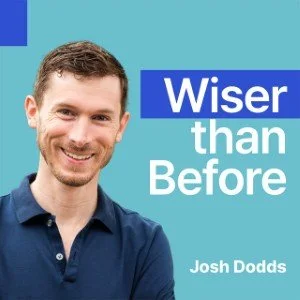
"The strategies he brought led to 5x subscribers in under 6 months and videos that 25x'd our previous view counts."
Why one person beats an agency
No handoffs
You work with me from the first conversation through every episode. The same person who sets up your show produces it for years. That continuity is what makes a show grow.
Award winning production
In 2020 I produced the RTÉ podcast Treasure Island: The Hunt for the Falcon Blanco, Silver Award winner at the New York Festivals Radio Awards.
No contracts
No lock ins. No retainers. No minimum terms. Clients who find the right fit stay for years because the work is good, not because they have to.
The First 10 Podcast
"Bren's attention to detail and understanding of the podcast landscape has meant that my podcast listenership is growing month on month. Podlad is the best investment in marketing I make each month."
Conor McCarthy
Inevitable Future of Work
"Working with Bren means you know the work will be done and done well, and he'll come to you with ideas for making your podcast better."
Jeff Lesher
Authentically Successful
"Not only is he a great podcast editor but he is also very consultative in helping me be a better podcaster."
Carol Schultz