Best Microphone for Podcasting
Stop comparing mics. Here's the one to buy.
I've worked with podcasters across every budget and setup. Almost none of them needed an expensive mic. Most needed to stop researching and start recording.
You're sick of comparison charts and sample after sample, trying to hear a difference through your laptop speakers. So here's one mic. It sounds great in every scenario I've used it in, it needs no extra equipment, and there are no affiliate links in this post, just a producer's honest pick.
My recommendation
Samson Q2U
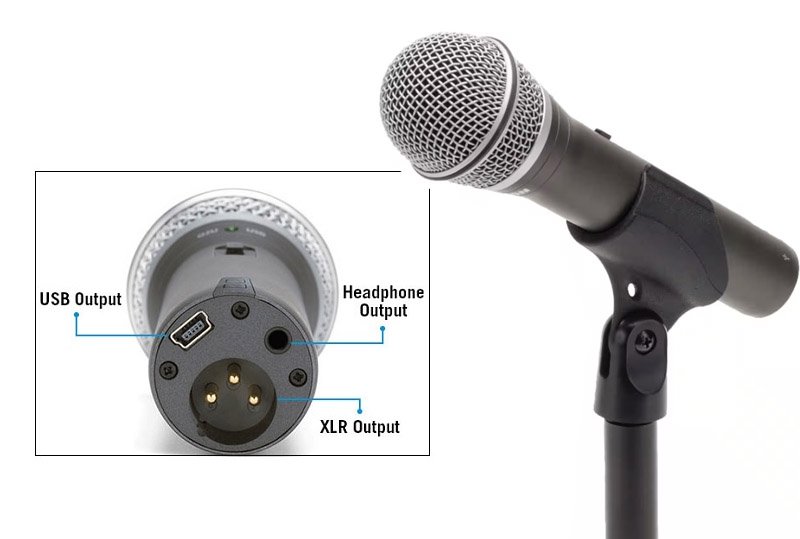
Around 60 to 70 euro. Dynamic. Works over USB or XLR, so it grows with you if you ever upgrade your setup. It's the mic I point almost every beginner toward, and the one I'd buy again myself.
Two ways to use it, and one to avoid
You've got two good options. Mount it on a proper mic arm that clips to your desk, so it can swing in close to your mouth and out of the way when you're not recording. Or hold it, the way a lot of guests do when they're not set up with their own gear, which works perfectly well as long as it stays close and steady.
What doesn't work is the small tripod stand that comes in the box. It's not adjustable enough to get the mic close to your mouth, so you end up sitting further away than you should, which quietly undoes a lot of the benefit of the mic itself. Skip it and get a proper arm instead.
What this actually sounds and looks like
Here's a still from one of my client's shows, Wiser Than Before. I'm on a mic stand on the left, and the guest is simply holding hers in her hand close to her mouth the whole time she talks. No stand, no setup, just held there. That's genuinely all it takes to get a clean, present sound from a guest.
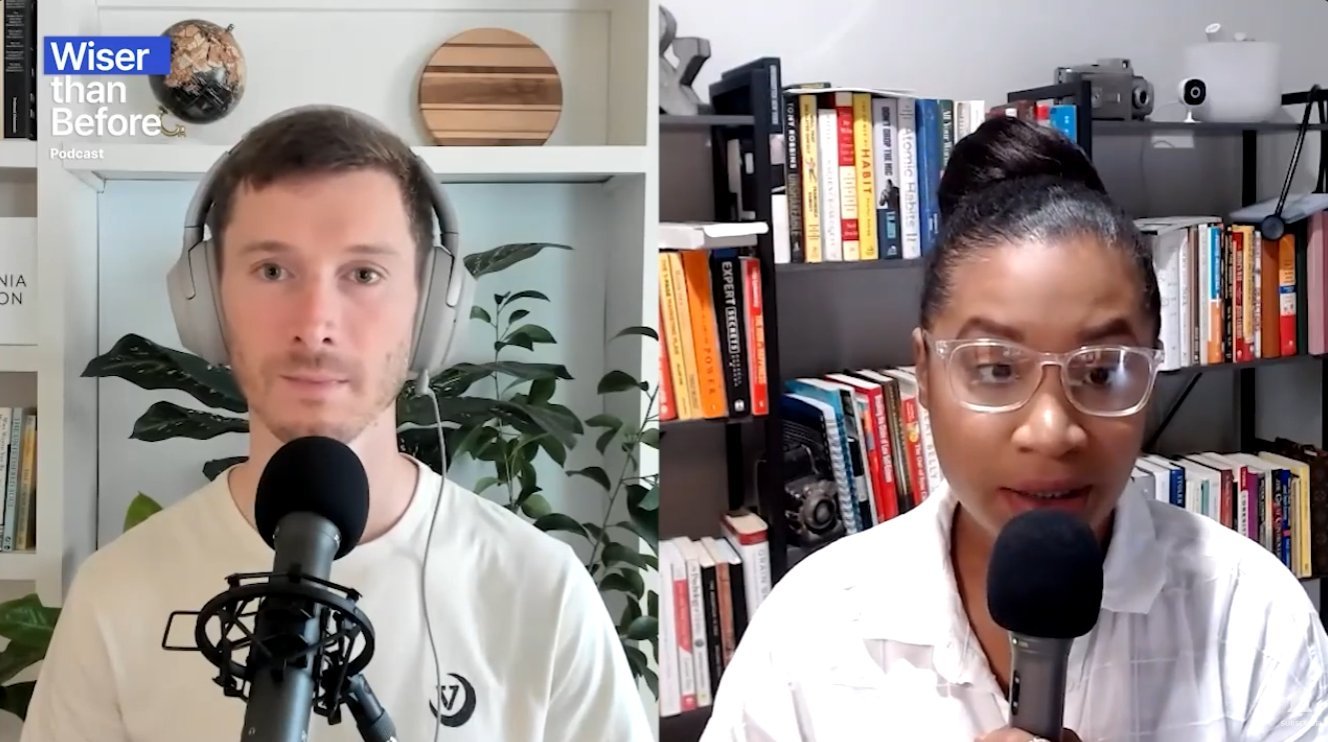
The mic is half the job. Positioning is the other half.
That warm, professional sound you hear on podcasts you admire isn't only down to the mic they bought. It's down to how close it sits to their mouth, the angle it's at, and how consistently they keep it there through the whole recording. Get positioning right and a 60 euro mic can sound better than an expensive one used badly. This matters as much as which mic you choose, maybe more.
The mic everyone buys is usually the wrong one
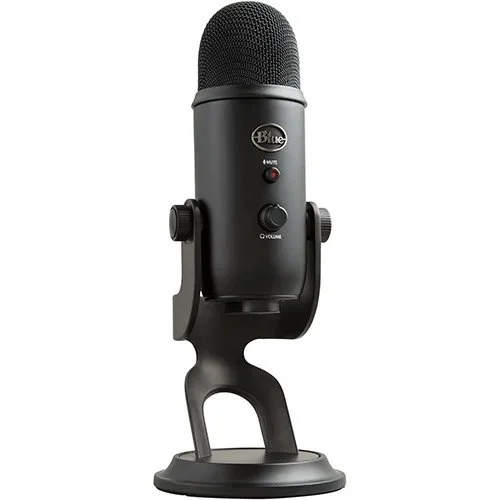
If you've searched for a podcast mic, you've seen the Blue Yeti. It looks the part, it's everywhere, and it's nearly always a bad buy for a beginner sitting at a desk.
Two problems. First, it's heavy and built to stand on a desk, which puts it further from your mouth than it should be. Distance is the enemy of good audio, every extra inch lets more room noise in and makes your voice sound thinner. Second, it's a condenser mic, sensitive enough to pick up everything else in the room along with you, fans, traffic, echo off bare walls.
None of that means you did something wrong if you already own one. It just means the mic that looks the most "professional" in photos is often the one working against you.
What about the Shure SM7B?
The Shure SM7B gets called the best podcast microphone more than any other, and it's a genuinely excellent mic. It's also the wrong starting point for almost every beginner, for reasons that rarely get mentioned alongside the praise.
It needs a lot of clean gain to sound right, more than a laptop or basic USB interface can give it. That means a separate preamp or an audio interface with enough power behind it, which is extra cost and an extra piece of gear to understand before you've recorded a single episode. It also takes more skill to use well, getting the gain staging and mic technique right is a learning curve in itself, not something you pick up by plugging it in. And unlike the Q2U, it's not designed to be picked up and held, it's a studio mic that lives on a boom arm.
If you're already comfortable with audio interfaces and gain staging, it's a fine mic to grow into. If you're starting from zero, it adds cost, complexity, and a steeper learning curve at the exact moment you need fewer obstacles between you and recording your first episode.
Why dynamic beats condenser for most people
Condenser mics are sensitive. That's good in a treated studio and bad in literally every other room. A condenser will pick up your laptop fan, traffic outside, the hum of your fridge two rooms away. A dynamic mic rejects most of that because it only really picks up sound that's close to it, which is exactly the situation most people are recording in.
Unless you've already built a treated recording space, dynamic is the right call. Most people never need to revisit this decision.
The mistake I see most often
Spending three hundred euro on a mic before recording a single episode. I've worked with people who bought high end gear and never released anything, because the money spent created pressure that the idea wasn't ready for. A cheap, decent mic and a clear sense of who you're talking to will always beat an expensive mic and no plan.
Do you need headphones too?
Yes, if you're recording with a remote guest. Headphones stop their voice leaking out of your speakers and back into your mic, which is what causes that echoey, distant sound on so many beginner episodes. Any pair works, the quality doesn't matter here, just that they're on.
Wireless earbuds are fine. Using them as your mic isn't.
AirPods and other wireless earbuds are great for listening, and there's nothing wrong with wearing them on a call. The problem is that every pair also has a tiny microphone built in, and on most laptops and phones, that's the microphone your computer picks by default the moment you plug them in or connect them. Nobody chose that on purpose, it just happens.
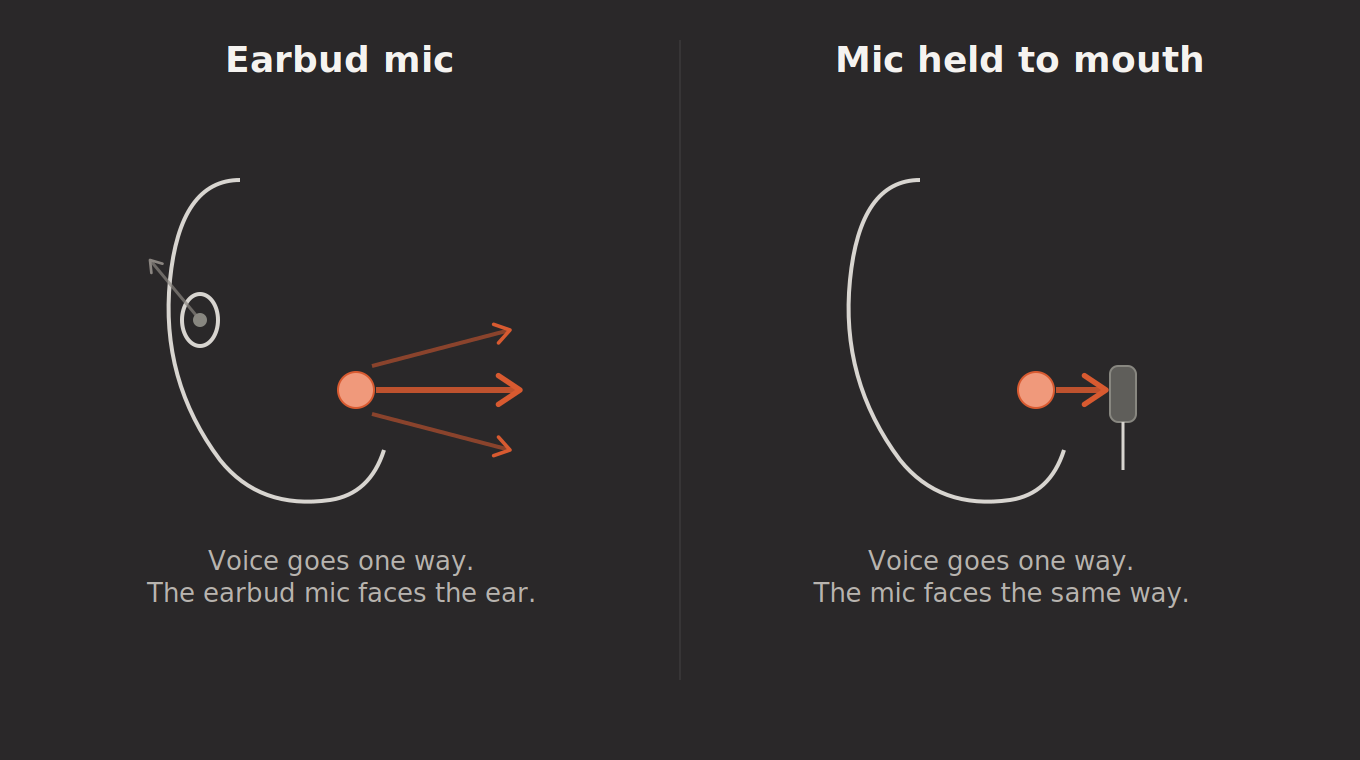
Think about where your voice actually goes when you speak. It comes out of your mouth and travels forward. The mic built into an earbud sits in your ear, off to the side, facing into your ear canal, not your mouth. You're asking it to catch a sound that's heading in a completely different direction. What it picks up is the leftover, the bit of your voice that bounces back, thin and distant.
Wear the earbuds if you want, they're great for hearing your guest. Just make sure your recording software is set to use your actual microphone as the input, not whatever earbuds happen to be connected. If you're inviting guests on, it's worth checking this with them too before you hit record, since it's one of the most common reasons a guest sounds distant on an otherwise good episode.
Feeling overwhelmed by all of this?
That's normal. There's a lot to figure out, and most guides just add to the noise. If you'd rather have someone walk you through your actual next steps, that's what this is for.
One session, one hour
Let's sort your next steps
Tell me where you're stuck, whether that's your mic, your setup, your sound, or just not knowing what to do next, and I'll go through it with you. By the end you'll know exactly what's wrong, what to fix, and what to do next.
If it turns out you want more than your audio fixed, the full four session package covers equipment, interviews, editing, and publishing for €675.

Who you're learning from
I'm Bren Russell. 17 years in broadcasting across RTÉ, BBC and MTV, then several years producing podcasts independently for coaches, consultants, and specialists. I've recommended this exact mic to more beginners than I can count.
Ready when you are. Pick a time above and I'll see you on the call.